Morse Micro, a WordPress to Webflow rebuild for a Wi-Fi HaLow chip company.
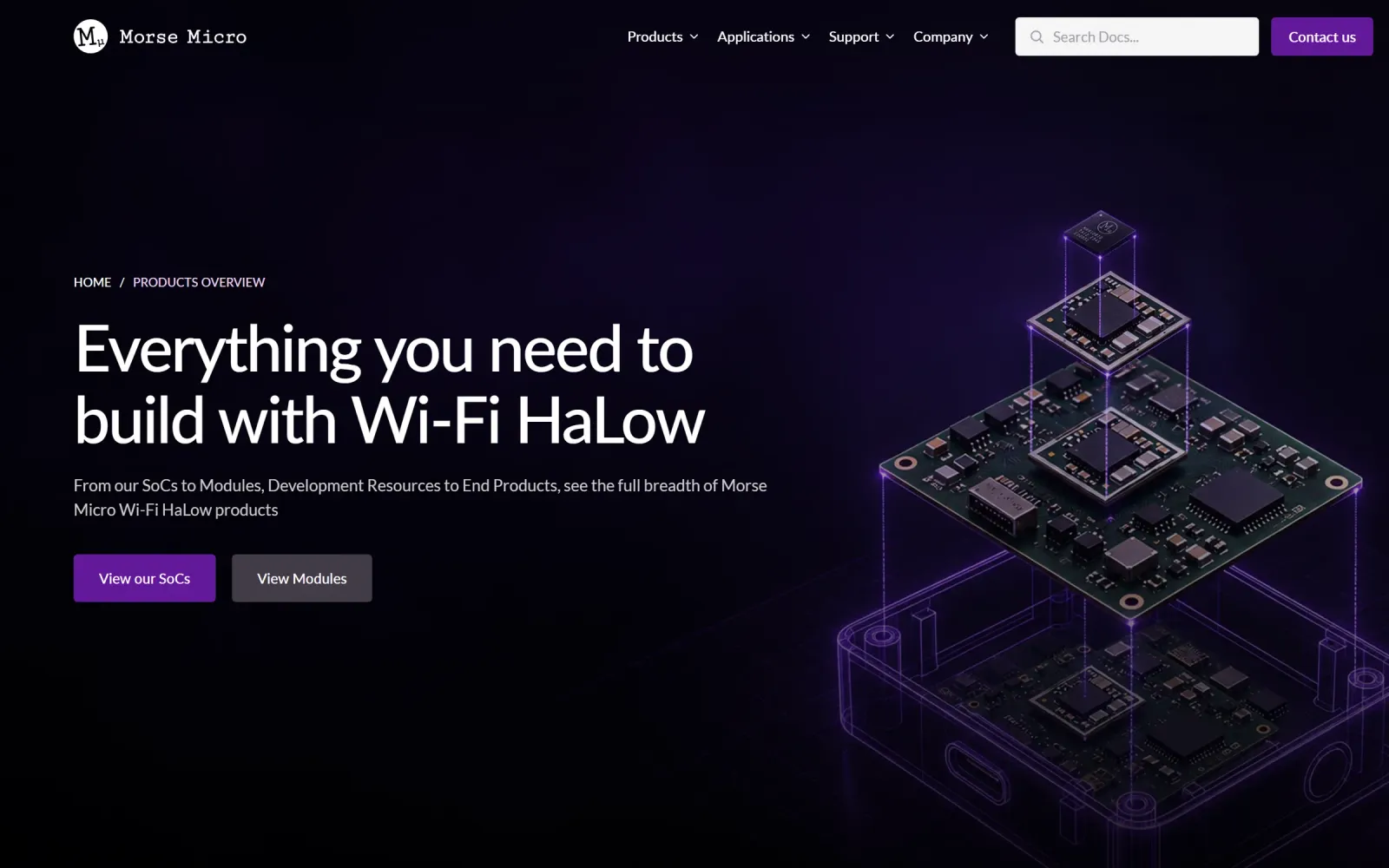
A WordPress to Webflow rebuild for Morse Micro, the Sydney-based Wi-Fi HaLow chip company. Built from Refract’s Figma designs into a scalable, CMS-driven website with filterable product catalogues, a custom megamenu and GSAP motion.

Overview
A global chip company that had outgrown WordPress.
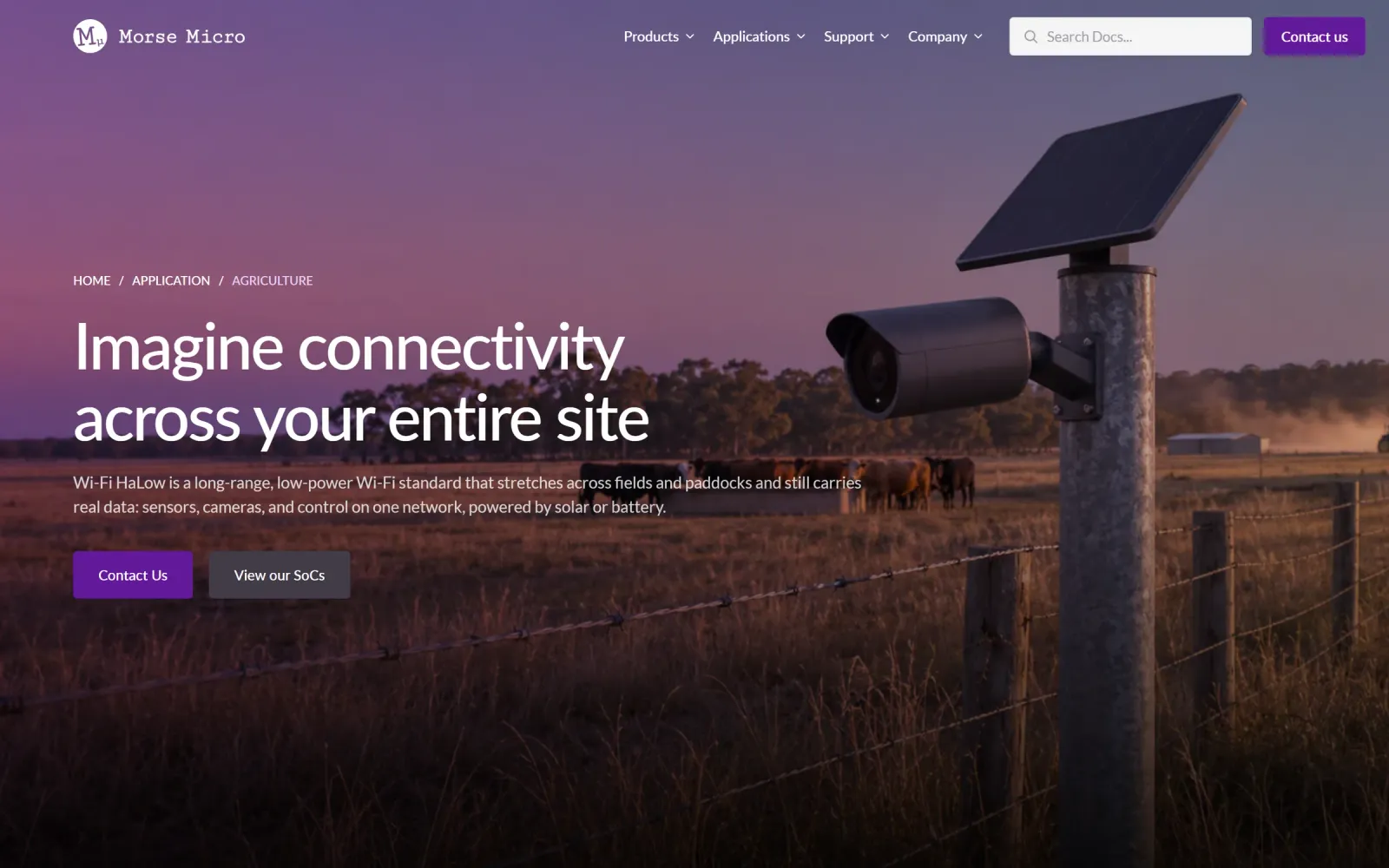
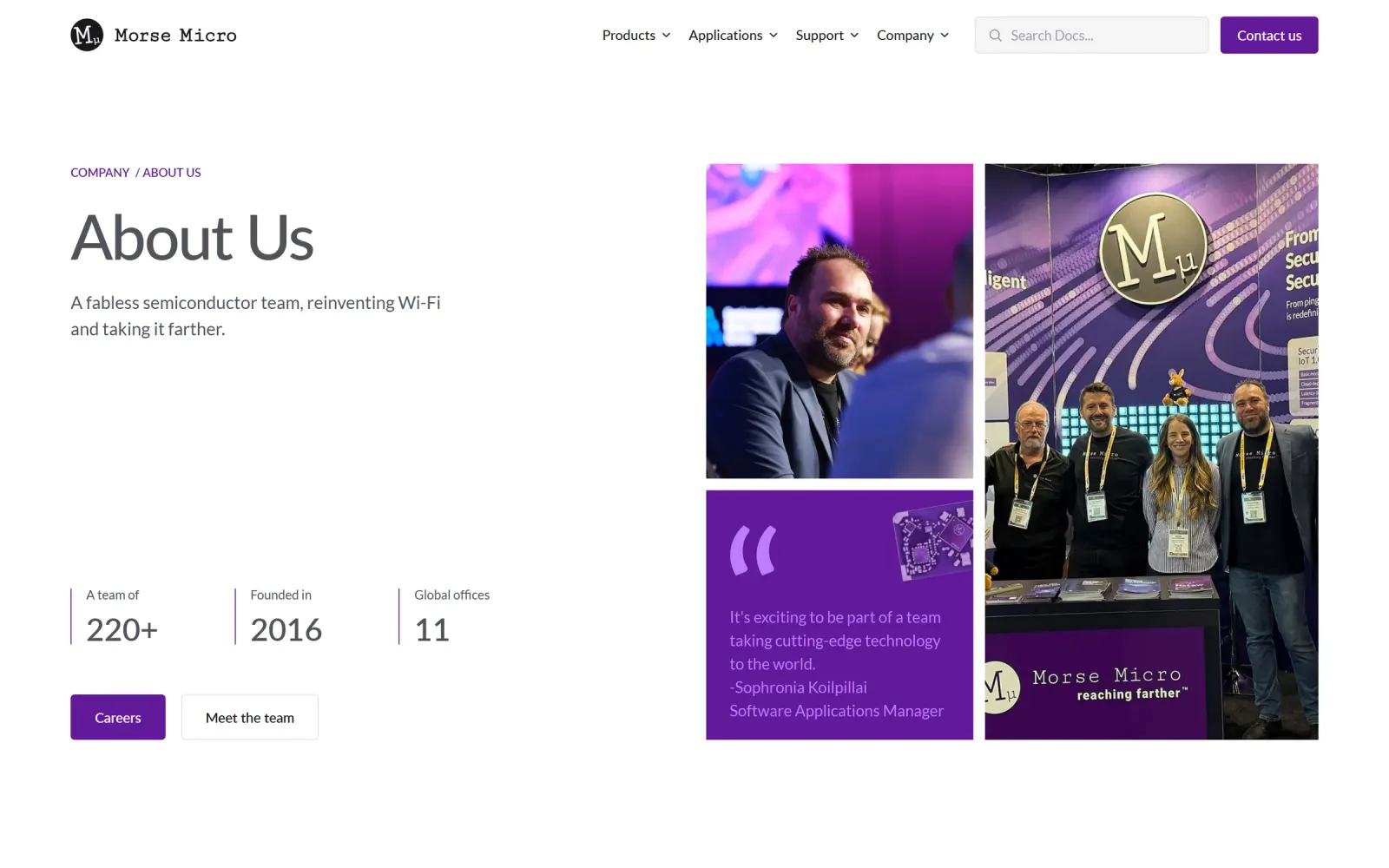
Morse Micro is a fabless semiconductor company founded in Sydney in 2016 by former Broadcom engineers. It builds Wi-Fi HaLow (IEEE 802.11ah) chips, a long-range, low-power form of Wi-Fi for devices that need to connect over large distances, and has grown to a team of 220+ people across 11 global offices.
Refract, a creative lab working between Sydney and New York, designed the new site in Figma. I partnered with their team on the full Webflow development, migrating the existing site, building the net-new pages and setting up a CMS the marketing team could run on their own.
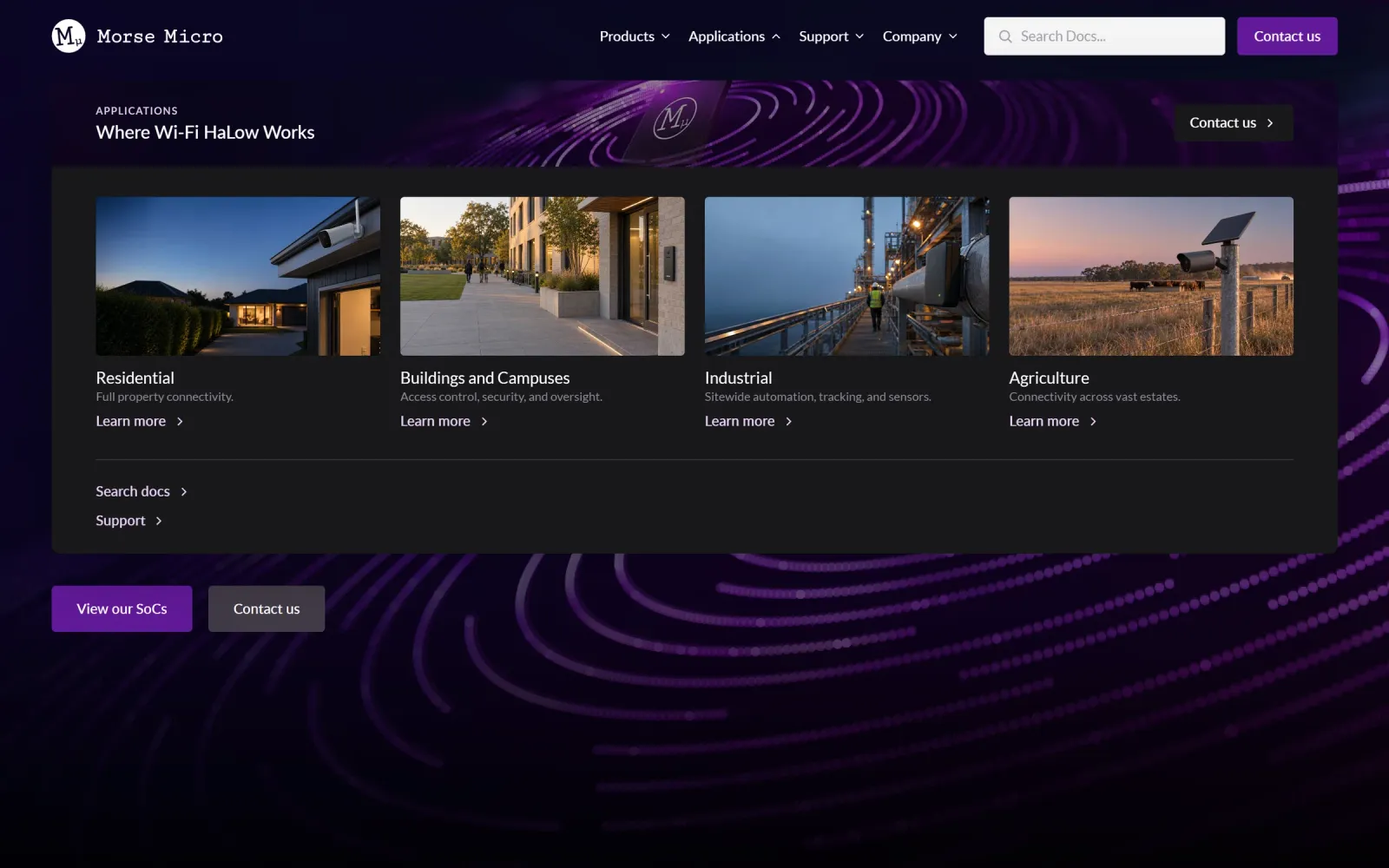
The final build covers products, applications, support, company, investors, newsroom and careers, all on a structured CMS, so new products, announcements, case studies and team members can be published without touching the Designer.
- Client
- Morse Micro
- Project for
- Refract
- Type
- Semiconductor company website
- Scope
- Webflow development
- Built with
- Figma to Webflow, Migration, GSAP, Client-First, Finsweet Attributes
- Timeline
- 10 weeks
- Live site
- morsemicro.com
Challenge
Deeply technical products for four very different audiences.
Morse Micro speaks to engineers, OEMs, design partners and investors at the same time, and its products are deeply technical. The new site had to make that range easy to navigate while replacing a WordPress setup that had become hard to maintain.
A large WordPress migration
Moving a large WordPress and Elementor site to Webflow without losing SEO value, including redirects for changed URL structures.
A deep product range
Chips, modules, development resources and end products all had to be filterable, linkable and updated from the CMS.
Four content-heavy megamenus
Each had to work across light and dark themes and collapse into a clean mobile experience.
Third-party platforms
GitBook documentation, HubSpot and Ashby had to connect without slowing the site down.
Motion without the cost
Mobile performance and accessibility had to stay strong on a site with a rich layer of motion and interactive components.
Approach
Audit first, then a CMS built around how the team publishes.
Migration audit and redirect planning
The existing site was crawled page by page to capture every URL, link, meta title and description, giving the client and agency a full page inventory, a 301 redirect map, and a list of broken links, duplicates and inconsistent titles to clean up in the move.
Client-First structure and a 21-collection CMS
Reusable hero, card and slider components sit on a 21-collection CMS documented in a build guide. Chips, modules, development resources and end products share one field structure for specs and buy links, and a CMS-driven table compares Wi-Fi HaLow with other wireless technologies.
Filterable catalogue and newsroom
Finsweet Attributes filters products by chip family and resource type with active filter tags, and deep-linked filter URLs let one megamenu link land on a pre-filtered list. The newsroom has Press Release and Blog filters, search and pagination.
Megamenu navigation and docs search
One reusable component holds four megamenus, light and dark themes driven by Webflow variable modes, a full-screen mobile drill-down with nested accordions, and a docs search connected to Morse Micro’s GitBook documentation and its AI assistant.
GSAP motion and interactive components
GSAP ScrollTrigger with Lenis smooth scrolling, a pinned “Our Values” section with a scroll progress line, a case study slider with drag and keyboard support, and leadership profiles in CMS modals with previous and next navigation.
Performance, accessibility and integrations
Lighthouse audits on staging and production, reviewed font loading and third-party scripts, ARIA table roles and labelled icon links, and clean HubSpot, Ashby and privacy policy embeds ahead of a staged rollout to the production domain.
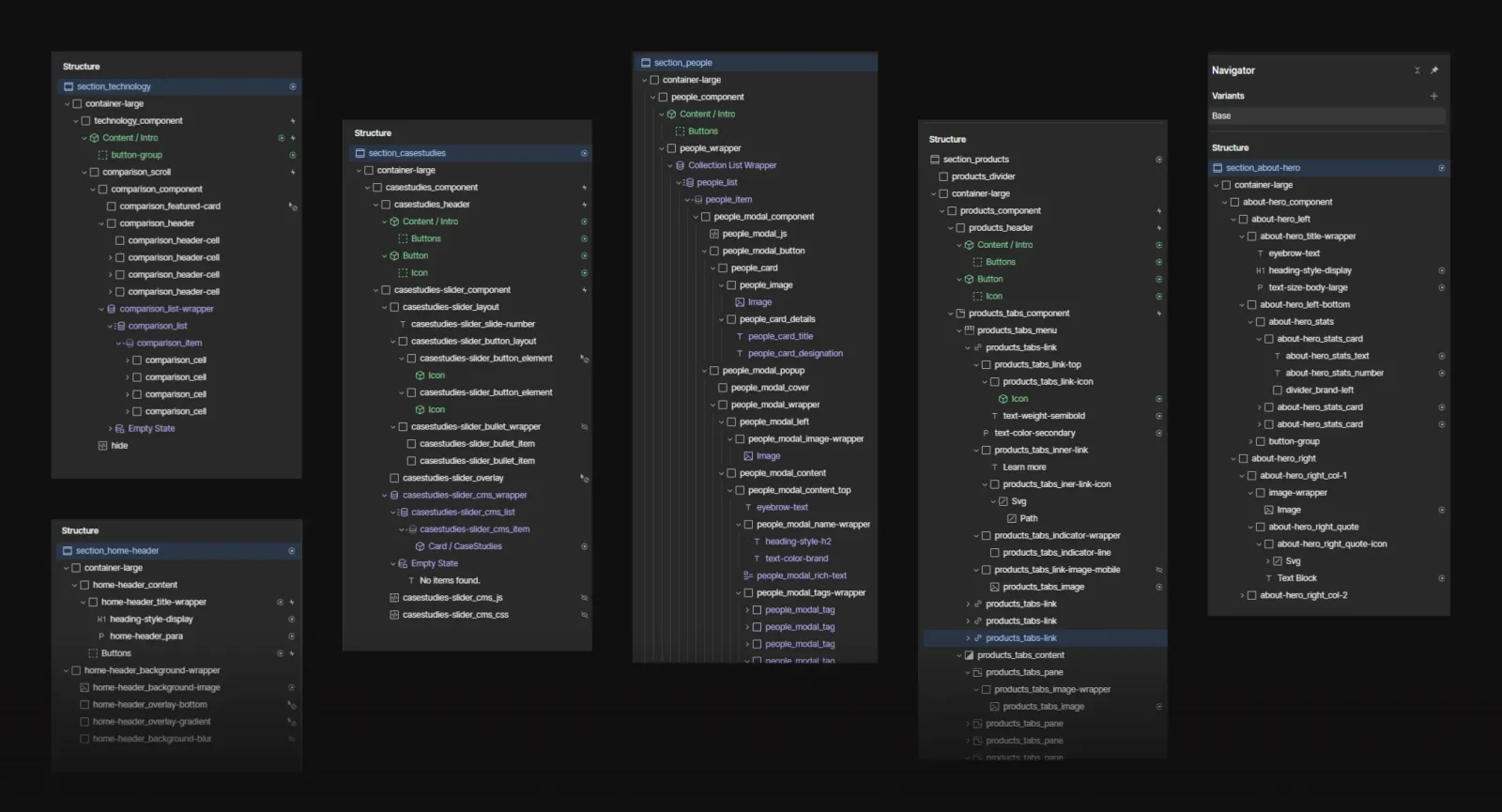
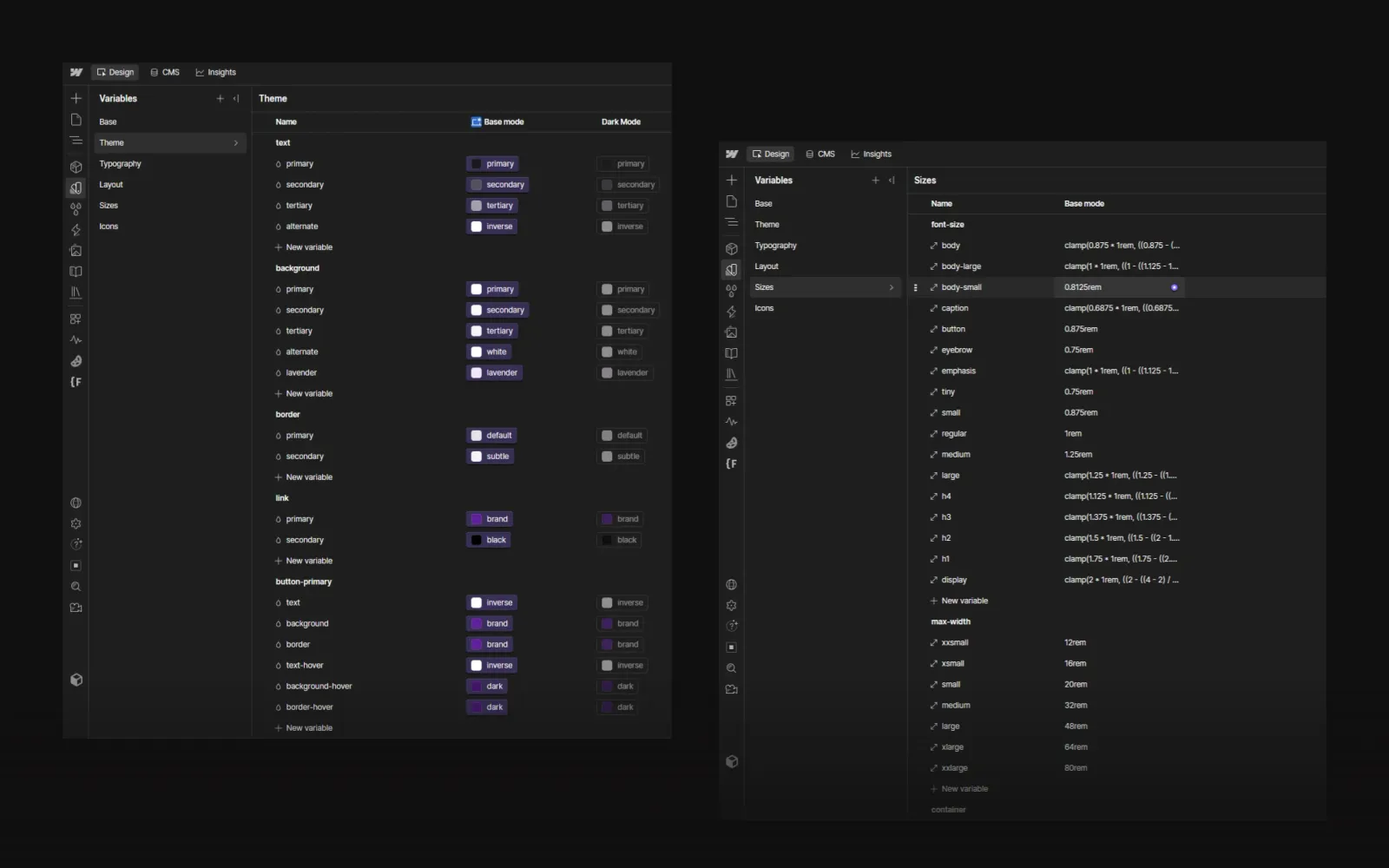
Inside the build
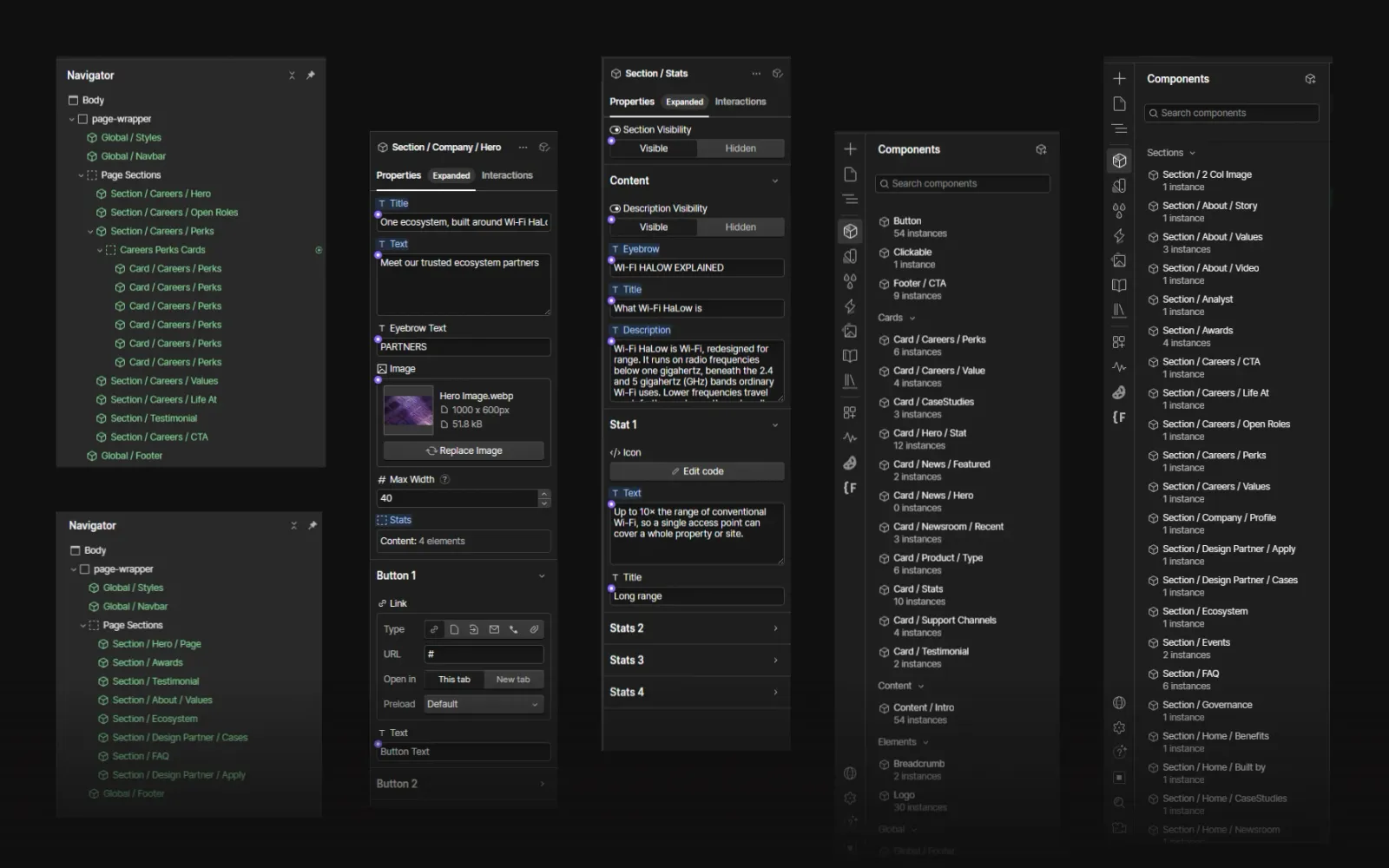
What the marketing team sees when they open Webflow.
Every page is assembled from named section components, and the team edits each one through its properties. Class names follow Client-First, and colour and type come from Webflow variables, so the build stays readable for the next person who opens it.
Result
A Webflow site the marketing team runs without developer help.
Morse Micro now runs on a Webflow website that matches Refract’s design and gives the marketing team full control of their content. The finished build has:
- A live production site at morsemicro.com, fully migrated off WordPress
- 21 CMS collections powering products, news, case studies, partners and the team
- A filterable product catalogue with shareable, deep-linked URLs
- A navigation system that scales across desktop, mobile and both themes
- A maintainable Client-First build the team can update on their own
More work
More Webflow projects
Client work and self-initiated concepts, each built from a Figma file with Client-First structure and tested on every screen size.
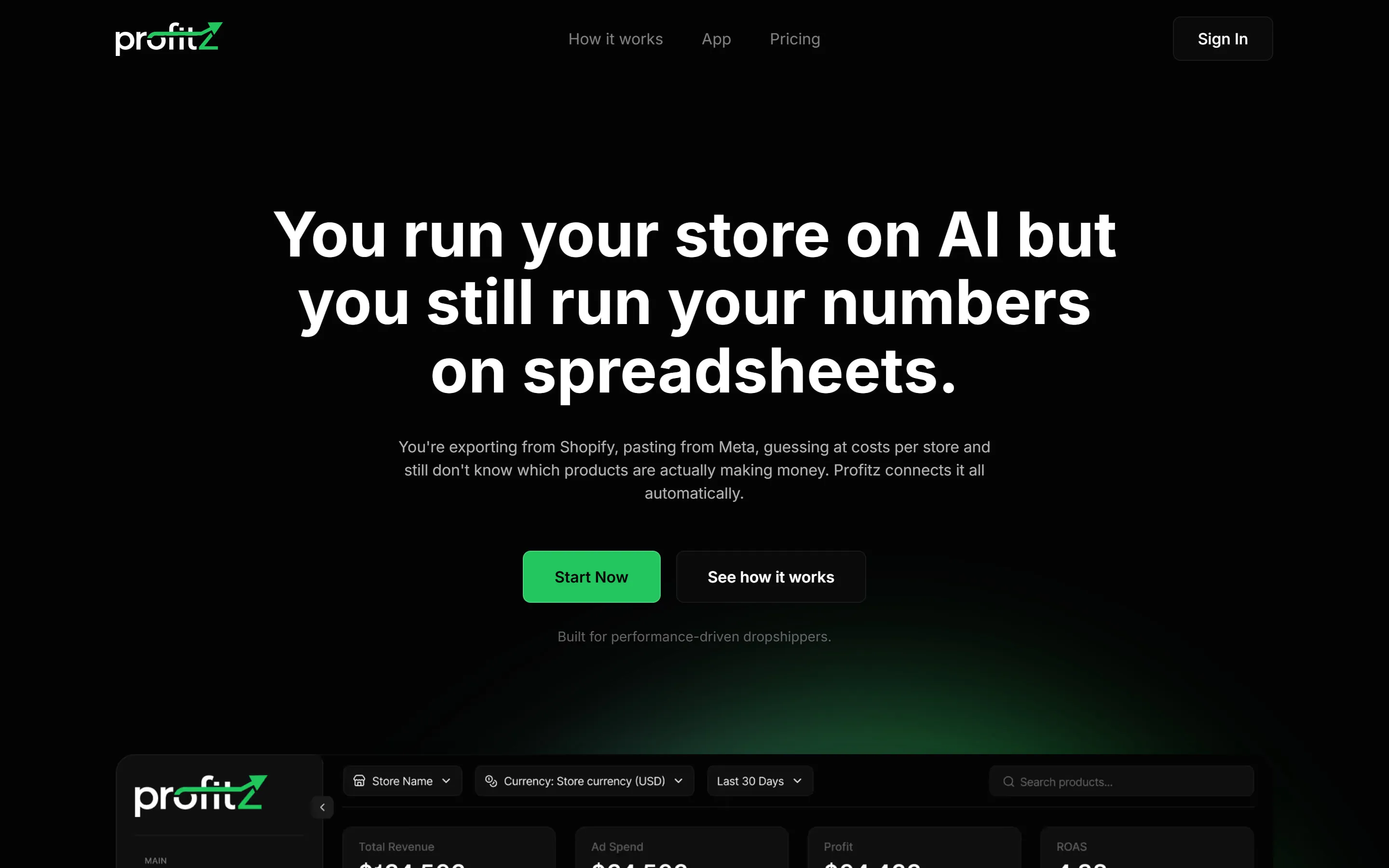
Profitz
Profit analytics for Shopify brands · Client project

Atlas—form
Architecture studio website · Concept