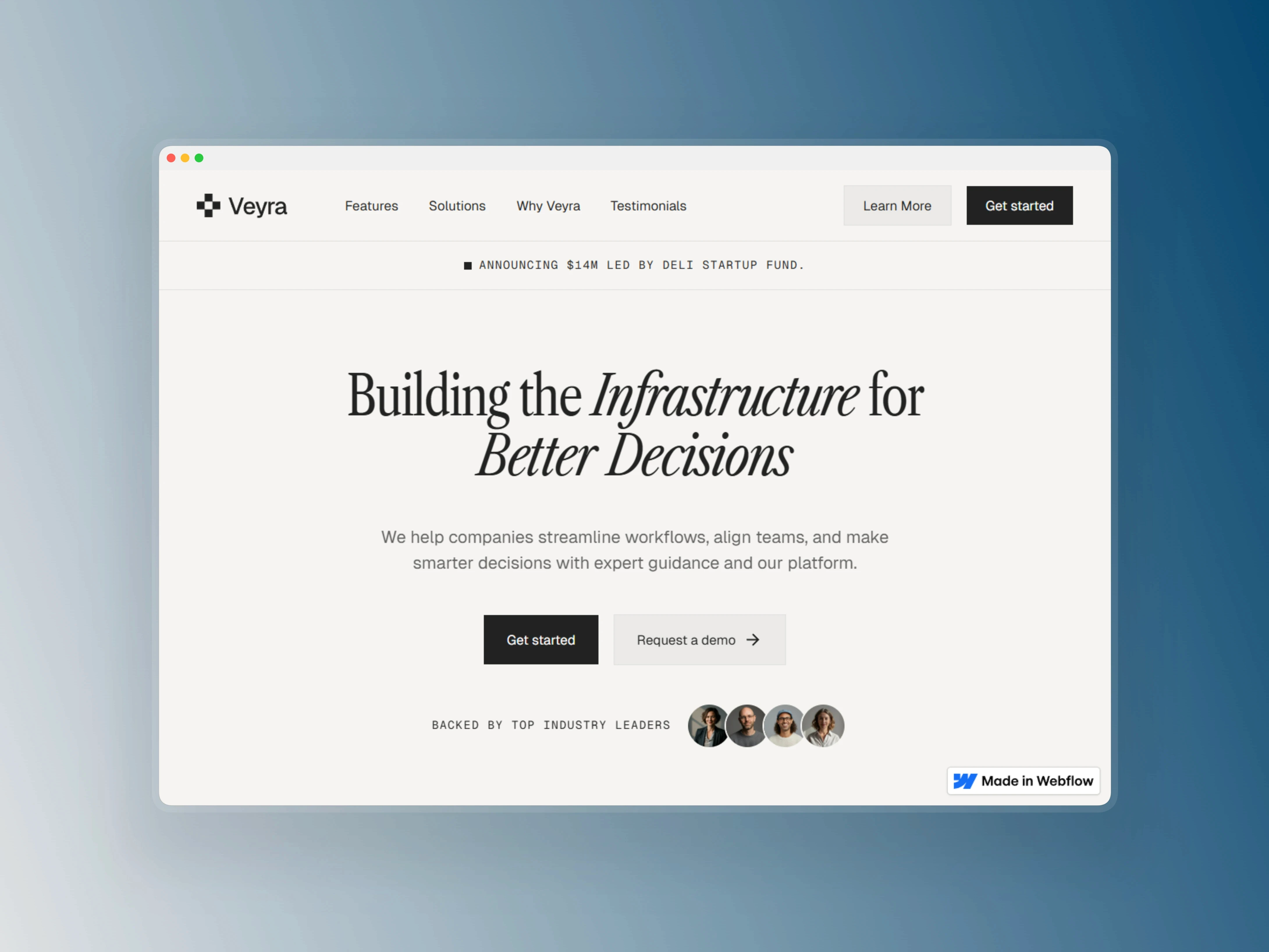
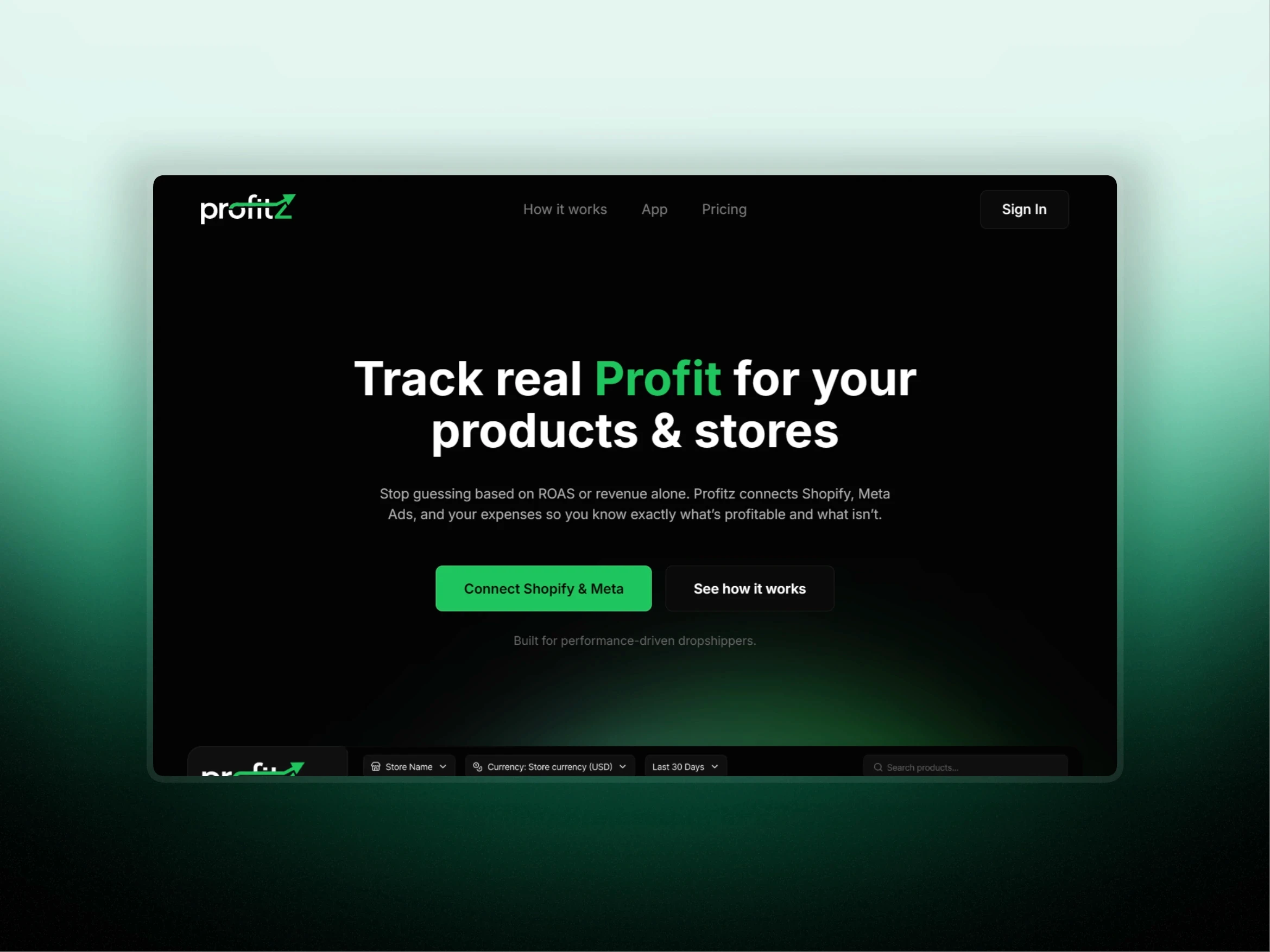
Conversion-focused Figma to Webflow build for a Shopify profit analytics platform. Structured to make a data-heavy product easy to understand and drive sign-ups.
Client
Profitz
Duration
1 Week
Scope
Webflow Development
Tags
Figma to Webflow · GSAP · Landing Page · Client-first
Overview
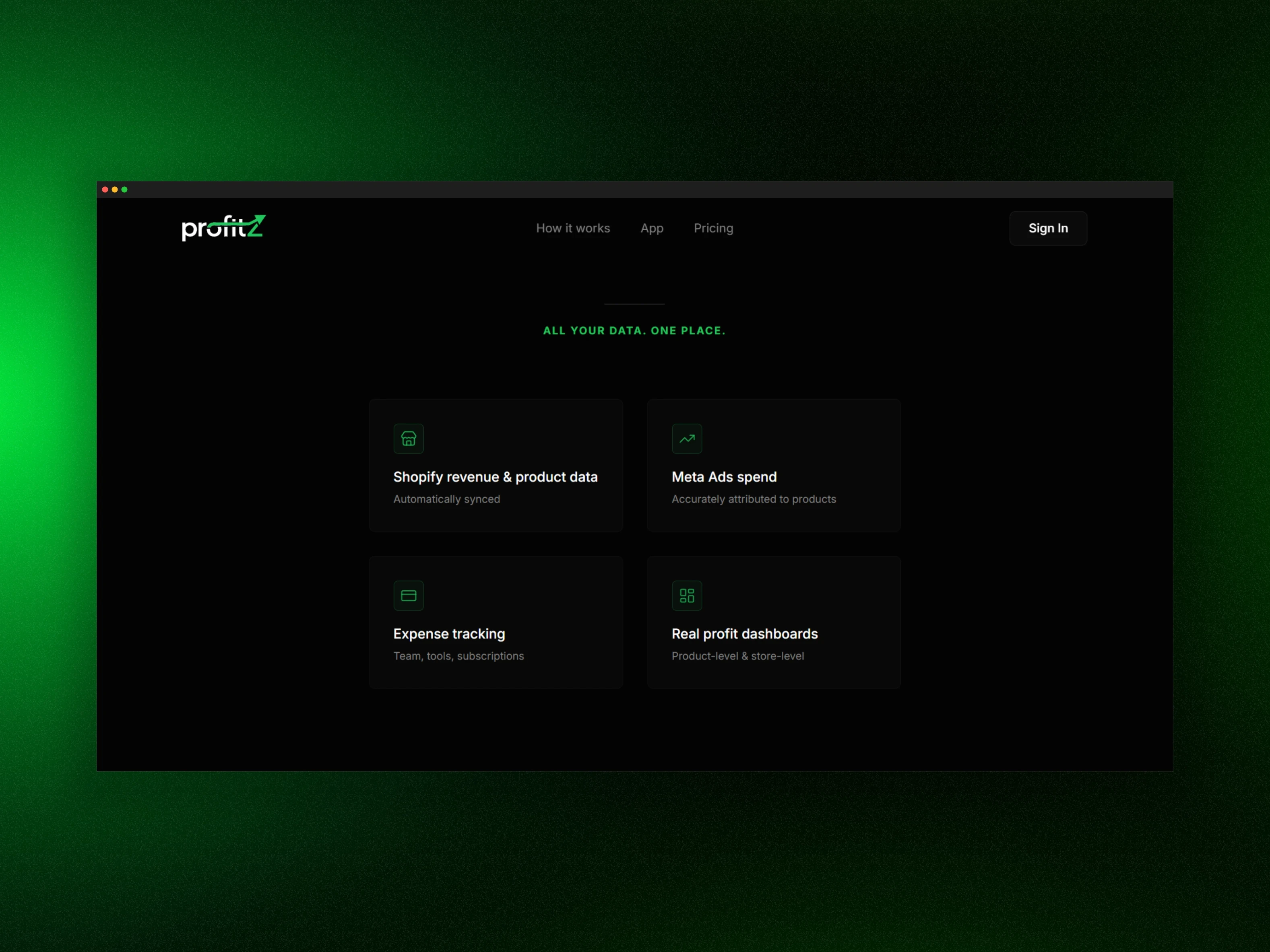
Profitz is a profit analytics platform built for Shopify store owners and media buyers. It connects Shopify revenue, Meta Ads spend, and business expenses into one dashboard so founders can see real net profit per product - not just ROAS or top-line revenue.
The goal of this project was to take a Figma design and build it into a fully responsive, production-ready Webflow website that makes a data-heavy product feel simple, trustworthy, and worth signing up for.
The Challenge
Profit analytics is a hard product to sell on a landing page. The features are powerful but abstract - P&L views, ad-to-product mapping, expense categorization - none of which mean much to a visitor who lands cold.
The main challenges were:
Complex product, short attention span. Multiple interconnected features needed to be communicated without overwhelming or confusing the visitor
Abstract value proposition. "Real profit" vs "ROAS" is a nuanced distinction that most visitors won't stop to think about unless the page guides them to it
Weak conversion flow. Without a clear journey from problem to solution to action, visitors would browse and leave without signing up
Data-heavy UI. Dashboard screenshots and tables needed to feel approachable, not intimidating
The Approach
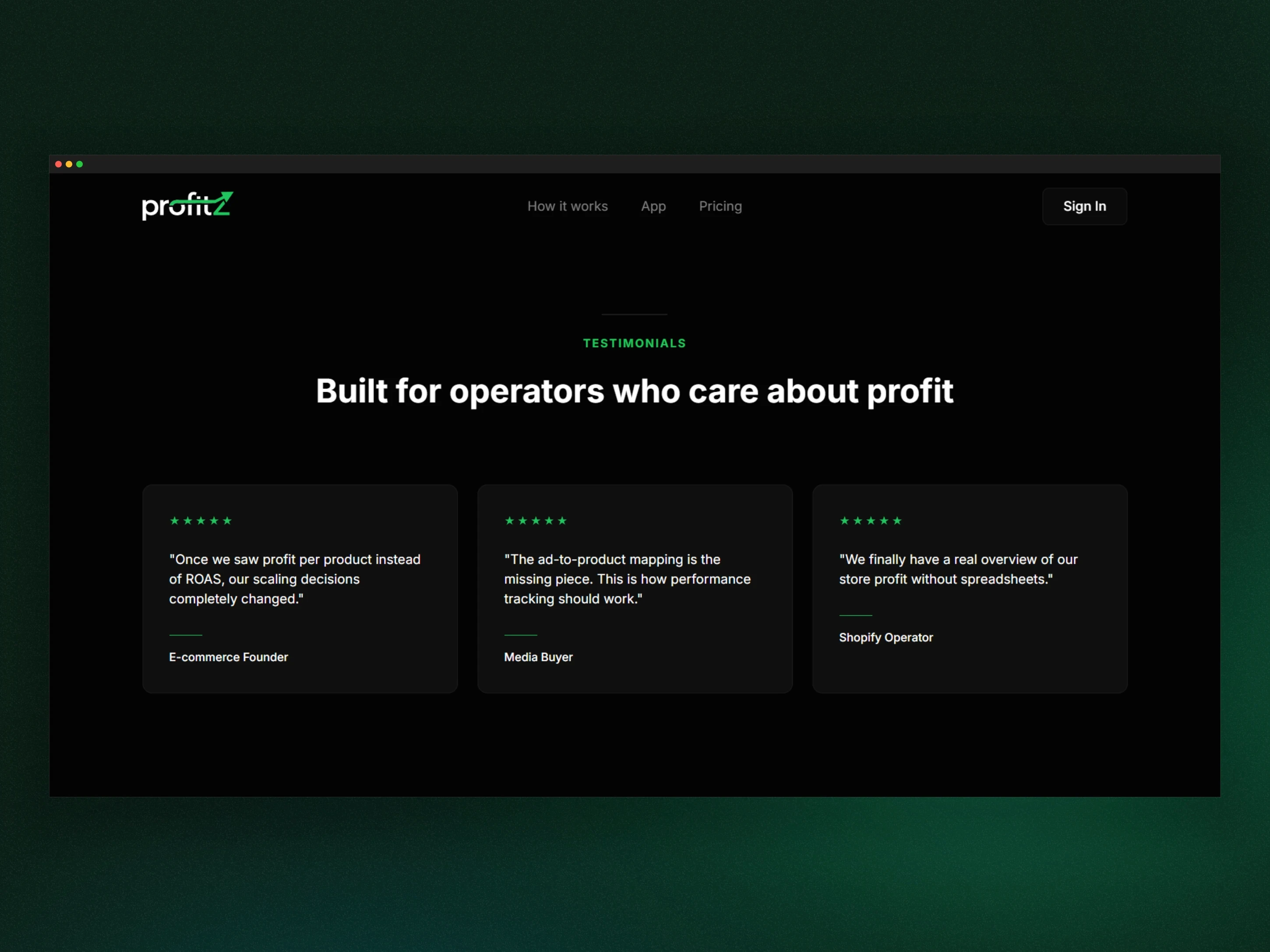
1. Problem-first content structure Rather than leading with features, the page was structured to surface the pain point first - founders scaling on ROAS alone without knowing true profit. This creates the context that makes the product's value obvious before it's even explained.
2. Figma to Webflow - pixel-accurate build The Figma design was converted with high attention to spacing, typography consistency, and layout precision across every breakpoint. No shortcuts in the class structure or component organization.
3. Client-First architecture Built using Client-First methodology throughout - reusable components, organized class naming, and a scalable structure that the client or any future developer can pick up and extend without confusion.
4. Conversion-focused CTA placement CTAs were placed at three points of highest intent - after the problem framing, after feature details, and at the pricing section - rather than dumped at the top and bottom of the page only.
5. Performance and SEO from the ground up Semantic HTML structure, optimized assets, mobile-first responsiveness, meta tags, and alt text set up correctly before handoff. Not bolted on at the end.

The Results
A clean, fast, and conversion-ready Webflow site that makes a complex analytics product easy to understand at a glance.
Complex multi-feature SaaS presented in a clear, scannable structure
Strong problem-to-solution narrative that earns the CTA
Scalable Client-First build ready for new pages and features
Fully responsive across desktop, tablet, and mobile
Production-ready with SEO and performance handled at handoff
Need a build like this?
Let’s turn your Figma file into a fast Webflow site.
If this project feels close to what you’re building, book a short call and I’ll help you map the cleanest path from design to launch.